Thứ Ba, 20 tháng 6, 2017

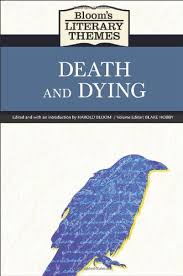
Blooms Literary Themes - Death and Dying

Discusses the role of death and dying in works such as "Beloved", "Heart of Darkness", "King Lear", "A Separate Peace", and many others.


Featuring approximately 20 essays, this title provides insights on this recurring theme in literature.

Blooms Literary Themes - DARK HUMOR

The technique of dark humor seeks to create comedy through the use of satirical wit and grotesque situations. This thematic technique can be found in "A Clockwork Orange", "A Good Man Is Hard to Find", "A Modest Proposal", "The Love Song of J. Alfred Prufrock", "White Noise", "The Yellow Wallpaper", and many others, as examined by this new volume.
Featuring original essays and excerpts from previously published critical analyses, this addition to the Bloom's Literary Themes series gives students valuable insight into the title's subject theme.
CONTENTS
Series Introduction by Harold Bloom: Themes and Metaphors
Volume Introduction by Harold Bloom
- The Plays of Aristophanes
- The Plays of Samuel Beckett and the Theatre of the Absurd
- Catch-22 (Joseph Heller)
- Cat's Cradle (Kurt Vonnegut)
- A Clockwork Orange (Anthony Burgess)
- On Dark Humor in Literature
- Divine Comedy (Dante Alighieri)
- The Dumbwaiter (Harold Pinter)
- The Stories of Nikolai Gogol and Lolita (Vladimir Nabokov)
- "A Good Man Is Hard to Find" (Flannery O'Connor)
- Henry IV, Parts One and Two (William Shakespeare)
- "The Love Song of J. Alfred Prufrock" (Thomas Stearns Eliot)
- A Modest Proposal (Jonathan Swift)
- The Mysterious Stranger (Mark Twain)
- Reservation Blues (Sherman Alexie)
- White Noise (Don DeLillo)
- Who's Afraid of Virginia Woolf? (Edward Albee)
- "The Yellow Wallpaper" (Charlotte Perkins Gilman)
Acknowledgments
Index

Blooms Literary Themes - CIVIL DISOBEDIENCE

The role of civil disobedience, the act of defying society for the greater good, has been a theme of many famous and often controversial literary works. This volume explores the role of civil disobedience in '1984', 'Antigone', 'The Crucible', 'Fahrenheit 451', the speeches of Malcolm X, and many more works.


Featuring original essays and excerpts from previously published critical analyses, this addition to the Bloom's Literary Themes series gives students valuable insight into the title's subject theme.


CONTENTS
Series Introduction by Harold Bloom: Themes and Metaphors
Volume Introduction by Harold Bloom
- 1984 (George Orwell)
- The Adventures of Huckleberry Finn (Mark Twain)
- Antigone (Sophocles)
- The Plays of Aristophanes
- "Bartleby, the Scrivener" (Herman Melville)
- Billy Budd (Herman Melville)
- Brave New World (Aldous Huxley)
- "Civil Disobedience" (Henry David Thoreau)
- Crime and Punishment (Fyodor Dostoevsky)
- The Crucible (Arthur Miller)
- Fahrenheit 451 (Ray Bradbury)
- The Poetry of Langston Hughes
- Invisible Man (Ralph Ellison)
- Julius Ceasar (William Shakespeare)
- "Letter from a Birmingham Jail" (Martin Luther King, Jr.)
- The Speeches of Malcolm X
- Native Son (Richard Wright)
- The Prince (Niccolò Machiavelli)
- The Scarlet Letter (Nathaniel Hawthorne)
- The Trial (Franz Kafka)
Acknowledgments
Index

Blooms Literary Themes - ALIENATION

In literature, the theme of alienation is frequently represented through characters that are psychologically isolated from society. This volume contains 19 essays that explore the role of alienation in such works as 'The Bell Jar', 'Brave New World', 'Waiting for Godot', 'The Iliad', and many others.


Featuring original essays and excerpts from previously published critical analyses, this addition to the Bloom's Literary Themes series gives students valuable insight into the title's subject theme.
 
 
CONTENTS
Series Introduction by Harold Bloom: Themes and Metaphors
Volume Introduction by Harold Bloom
- "Bartleby, the Scrivener" (Herman Melville)
- The Bell Jar (Sylvia Plath)
- Black Boy (Richard Wright)
- Brave New World (Aldous Huxley)
- The Catcher in the Rye (J.D. Salinger)
- The Chosen (Chaim Potok)
- Dubliners (James Joyce)
- Fahrenheit 451 (Ray Bradbury)
- Hamlet (William Shakespeare)
- The Iliad (Homer)
- Invisible Man (Ralph Ellison)
- Mrs. Dalloway (Virginia Woolf)
- Notes from Underground (Fyodor Mikhailovich Dostoevsky)
- One Flew Over the Cuckoo's Nest (Ken Kesey)
- The Strange Case of Dr. Jekyll and Mr. Hyde (Robert Louis Stevenson)
- The Stranger and The Myth of Sisyphus (Albert Camus)
- The Trial (Franz Kafka)
- Waiting for Godot (Samuel Beckett)
- The Waste Land (Thomas Stearns Eliot)
- "Young Goodman Brown" (Nathaniel Hawthorne)
Acknowledgments
Index


The English Advisor - Patch Work Approach

"The English Advisor" is a patchwork of information, ideas, advice, charts, examples and word lists about many different areas of English, for many different kinds of learners with many different aims. It's partly for reading, partly for study, partly for memorization and partly for reference. Some people will be interested in all of it. Some people will only need part of it.


"The English Advisor" is arranged thematically, not progressively. You can read it from cover to cover if you want to, or skip from one section to another, or consult it when you have a specific question. To help you find the information you need, there's a table of contents at the front of the book, and cross references in the text to direct you to important related sections. 


About the Polish: "The English Advisor" is mostly in English, but there's a little bit of Polish too. Sometimes the Polish is a little bit strange, because it's sometimes used to clarify a word or expression that isn't very common or natural in Polish. That doesn't mean the word or expression is strange in English!  And it doesn't mean that we didn't know how strange it sounds in Polish. But "The English Advisor" is not a guide to beautiful Polish, and it's not a dictionary for translators.

Opportunities Resource Pack - English Culture

A supplementary booklet for "Opportunities" course. Ranges from elementary to upper intermediate level. Focuses on presenting elements of British and American culture. The main topic of this edition is the European Union.


CONTENTS:
I.   The European Union
-    What do you know about the European Union? (Pre-Intermediate)     
-    Europe without Frontiers (Intermediate)    
-    European Institutions (Upper Intermediate)     
-    Important Dates in the European Union (Intermediate)     
-    Education and Foreign Languages in the European Union (Upper Intermediate)
-    The European Union Quiz (Pre-Intermediate)     
-    The European Union - Teacher's Notes    
 
II.    Britain and Europe (Intermediate)     
III.    Great Britain and The United Kingdom (Intermediate)    
IV.    Scotland and Wales (Intermediate)    
V.    Ireland (Intermediate)    
VI.    The Sovereign, The Royal Family (Intermediate)    
VII.    Britain - Teacher's Notes (Pre-Intermediate)    
VIII.    Britain - Activities (Pre-Intermediate)    
IX.    The English and their Habits - Extracts (Pre-Intermediate)    
X.    The English and their Habits - Teacher's Notes (Pre-Intermediate) 
XI.    Shakespeare and the theatre - Teacher's Notes (Intermediate)    
XII.   Shakespeare and the theatre - Activities (Intermediate)    
XIII.    Introducing the USA (Elementary)    
XIV.    The Fifty States (Elementary)    
XV.   The White House (Pre-Intermediate)    
XVI.   The Statue of Liberty (Pre-Intermediate)    

Thứ Hai, 19 tháng 6, 2017

Assessing the Online Learner - Resources and Strategies for Faculty

Written by Rena M. Palloff and Keith Pratt, experts in the field of online teaching and learning, this hands-on resource helps higher education professionals understand the fundamentals of effective online assessment. It offers guidance for designing and implementing creative assessment practices tied directly to course activities to measure student learning.


The book is filled with illustrative case studies, authentic assessments based in real-life application of concepts, and collaborative activities that assess the quality of student learning rather than relying on the traditional methods of measuring the amount of information retained.